Leadership Accountability
To ensure a successful and enriching leadership term filled with opportunities for growth, Scouts begin by meeting with their assigned Adult Mentor to set meaningful SMART goals and explore how they want to lead in the months ahead. At the end of the term, they meet again to celebrate progress, reflect on what they’ve learned, and complete their leadership review. Leadership credit is awarded once a Scout has met their SMART goals and received the appropriate sign-off from their adult mentor.
SMART stands for:
S – Specific: The goal is clear and well-defined.
M – Measurable: You can track progress or know when it’s completed.
A – Achievable: The goal is realistic and attainable.
R – Relevant: The goal matters for the position and aligns with a larger purpose.
T – Time-bound: The goal has a clear deadline or timeframe.
Leadership Positions
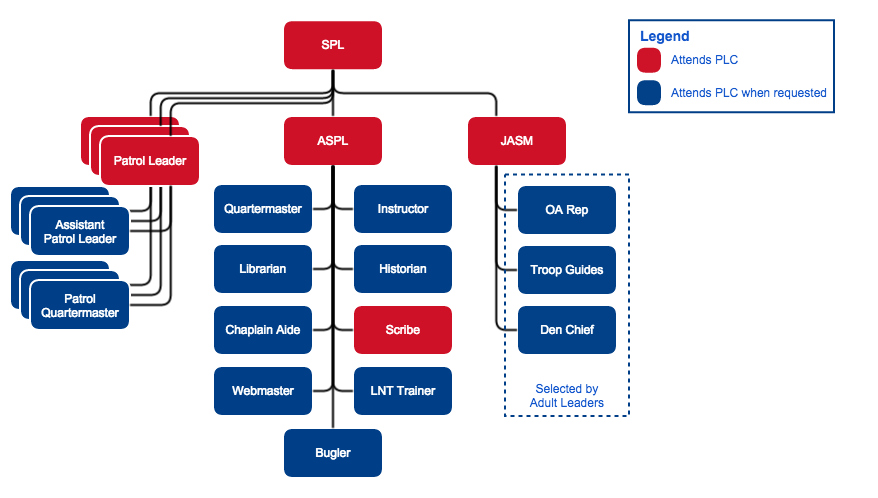
Troop Leadership Positions
Patrol Leadership Positions
Who Signs Off?
- Scoutmaster: Senior Patrol Leader, Assistant Senior Patrol Leaders, and Junior Assistant Scoutmaster.
- Adult Quartermaster: Troop Quartermaster
- First Year Program Leader: Troop Guides
- Youth Leadership Mentors: All other eligible positions
Even if a position does not earn leadership credit—such as Assistant Troop Quartermaster, Assistant Patrol Leader, or Patrol Quartermaster—Scouts in these roles are warmly encouraged to meet with a Youth Leadership Mentor. Mentors are here to support every Scout, help them grow, and make their leadership experience meaningful.
Organization Chart